crwdns2915892:0crwdne2915892:0
Follow this guide to replace a worn-out or dead battery in your MX Anywhere 3S for Mac wireless mouse.
It’s natural for batteries to lose capacity as they age. If your mouse dies quickly and doesn't hold a charge, it may be time to replace the battery.
For safety, perform this repair when your battery is below 15% charge. Any charged lithium-ion battery can be hazardous if punctured or damaged. If your battery looks puffy or swollen, take appropriate precautions.
crwdns2942213:0crwdne2942213:0
-
-
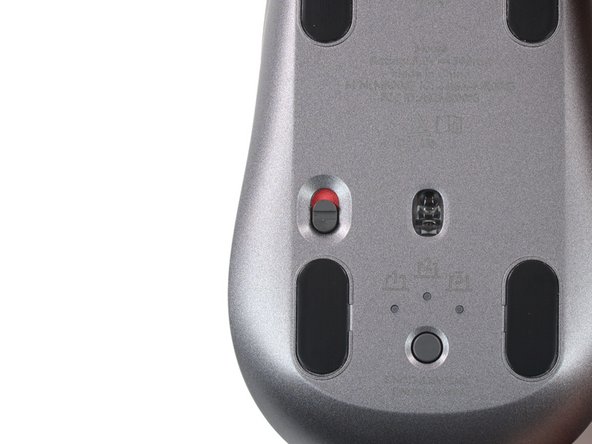
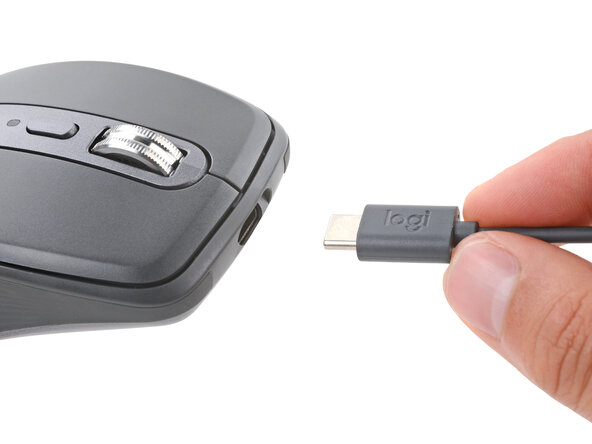
Slide the mouse's power switch to the OFF position and unplug any cables.
-
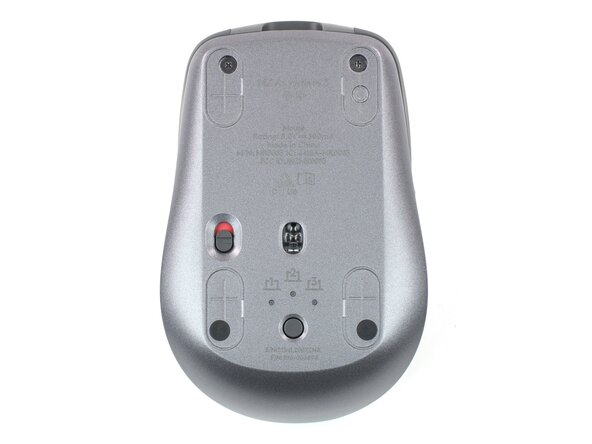
Flip the mouse over so the feet are facing up.
-
-
-
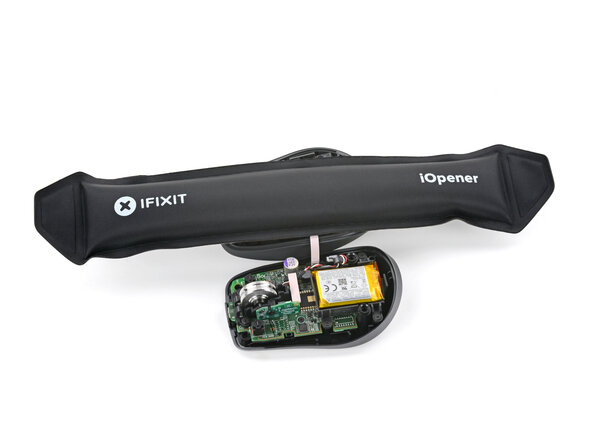
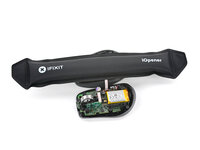
Heat an iOpener and lay it on the mouse feet for about two minutes to soften the adhesive.
-
-
-
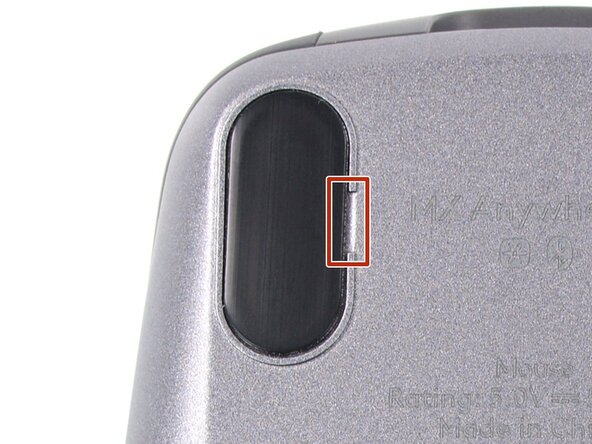
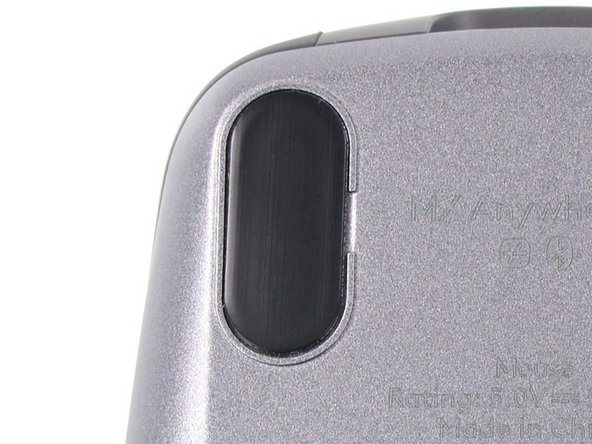
There are small gaps in the rims surrounding each foot. This is where to insert your tool when peeling up the feet.
-
-
-
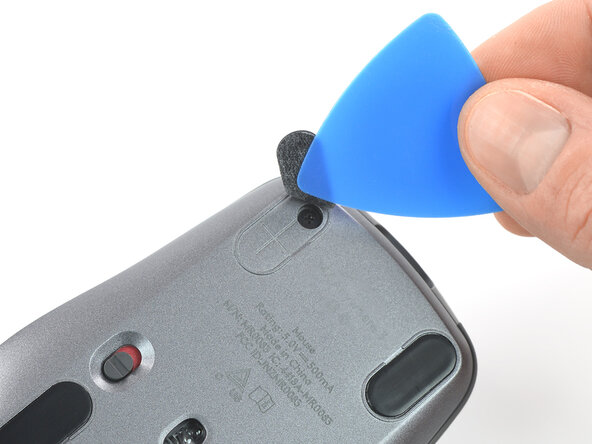
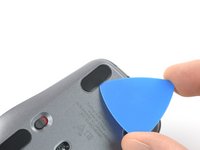
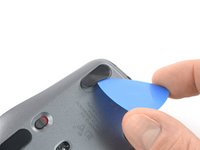
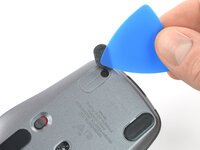
Push the tip of an opening pick (or spudger) underneath the mouse foot, into the gap in the rim.
-
Slide your pick under the foot and lift to remove it.
-
Repeat the process to remove the three remaining mouse feet. If you're having trouble sliding the tool under a foot, reheat it and try again.
-
Use a pair of tweezers or a spudger to remove any large chunks of leftover adhesive. Thoroughly clean the bottom of the mouse with isopropyl alcohol and a lint-free of microfiber cloth. Allow the surface to dry completely.
-
Peel your new mouse feet off their adhesive liners and press them firmly into place.
-
-
-
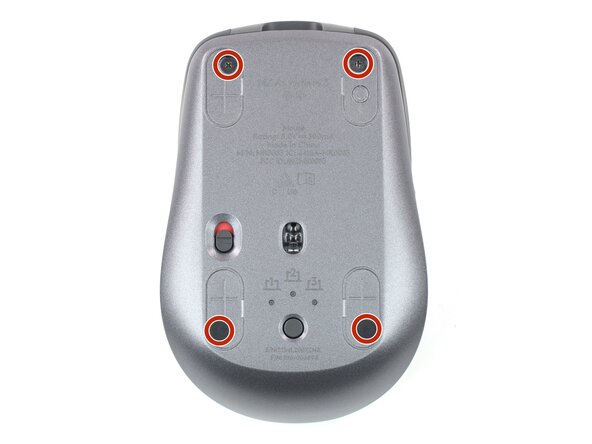
Use a Phillips screwdriver to remove the four 4.3 mm‑long screws securing the two halves of the mouse together.
-
-
-
Gently lift the top shell off the mouse up and flip it over the right edge.
-
-
-
-
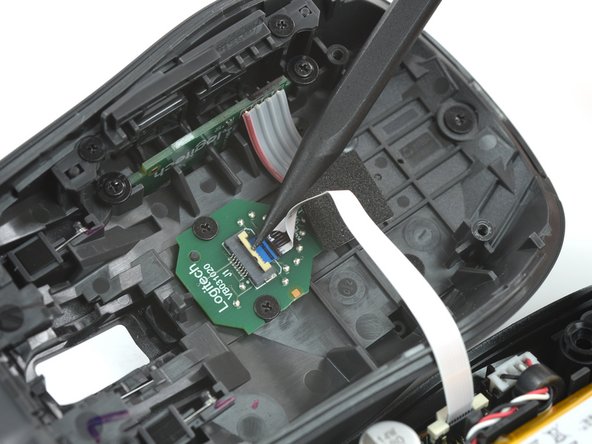
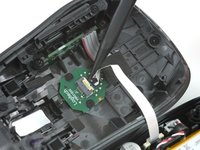
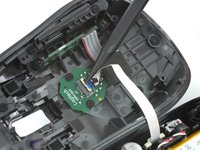
Use the point of a spudger or a clean fingernail to flip up the small, hinged locking flap on the interconnect cable ZIF connector (located on the underside of the top shell).
-
-
-
Apply a heated iOpener to the board on the underside of the mouse's top half for two minutes.
-
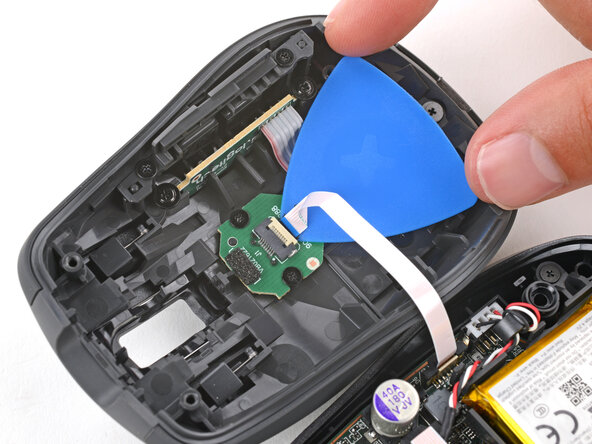
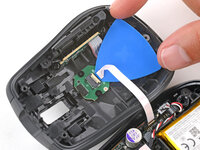
Gently slide the tip of an opening pick under the cable to separate its adhesive.
-
-
-
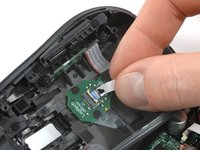
Use your fingers or tweezers to pull the cable straight out of its socket.
-
-
-
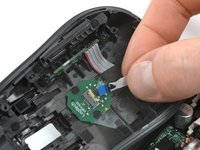
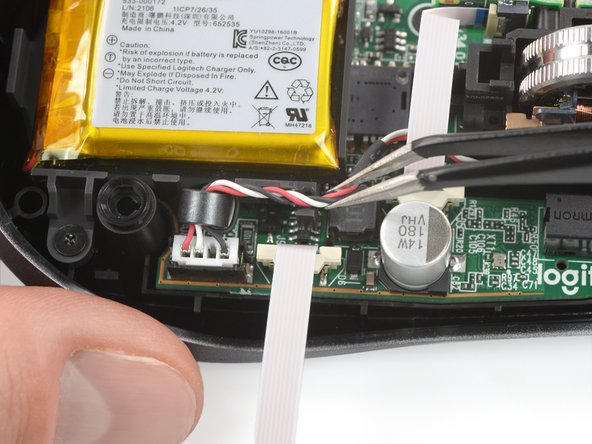
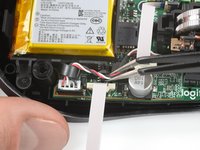
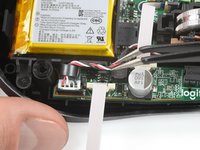
Use a pair of tweezers (or the point of a spudger) to lift the wheel assembly cables out from under their clip on the battery housing.
-
-
-
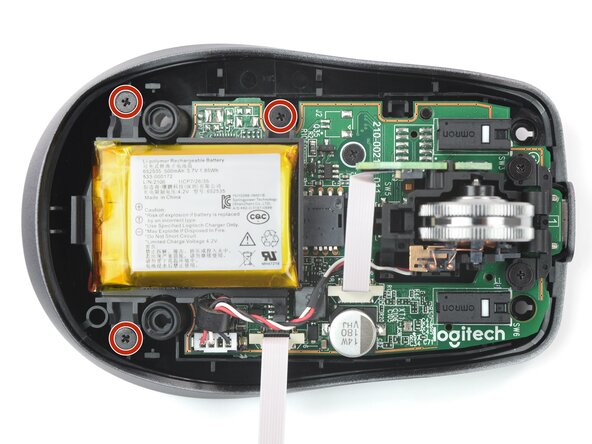
Use a Phillips screwdriver to remove the three 3.4 mm‑long screws securing the battery housing.
-
-
-
Lift the battery housing up and set it aside so you can access the connector underneath.
-
-
-
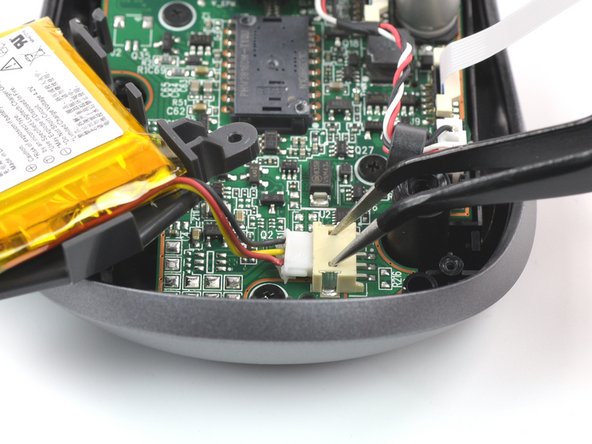
Insert each arm of a pair of pointed tweezers into the small cutouts on the top of the battery connector socket.
-
Slowly push the connector out of its socket, just enough to grip the top of the connector with another pair of tweezers or your fingers.
-
Pull the battery connector completely out of its socket to disconnect it.
-
-
-
Remove the battery housing.
-
-
-
Flip the battery housing over so the battery is facing down.
-
Lay a heated iOpener on the battery housing for two minutes to soften the battery adhesive.
-
-
crwdns2935267:0crwdne2935267:0Tesa 61395 Tape$5.99
-
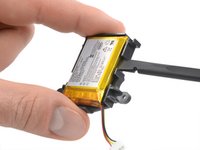
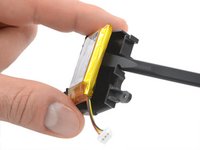
Insert the flat end of a spudger between the battery and its housing through one of the cutouts.
-
Use the spudger to pry the battery away from the housing to separate its adhesive.
-
Remove the battery.
-
Use tweezers or your fingers to peel all the old adhesive off the battery housing—it shouldn't leave any residue.
-
If your new battery doesn't come with adhesive pre‑installed, apply a couple strips of double-sided tape to the battery housing.
-
Orient your new battery so the sticker is facing up and the cables are on the short side of the housing that protrudes outward. Press the battery firmly into place to secure it.
-







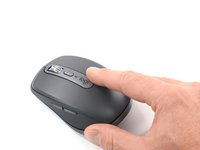
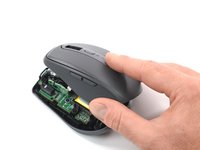
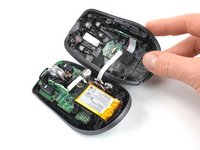





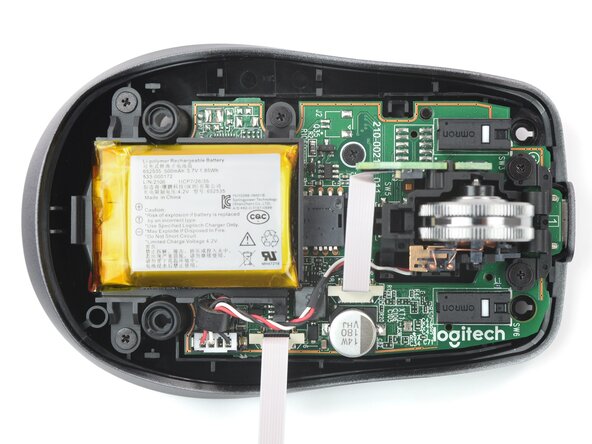


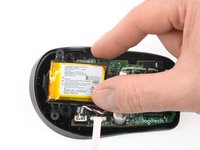
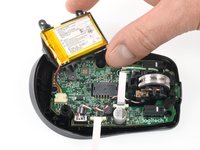


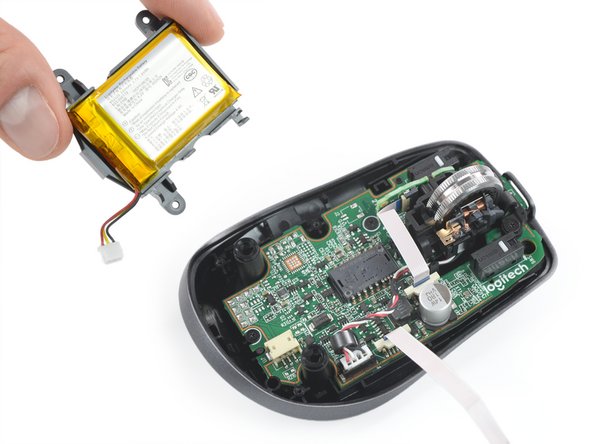
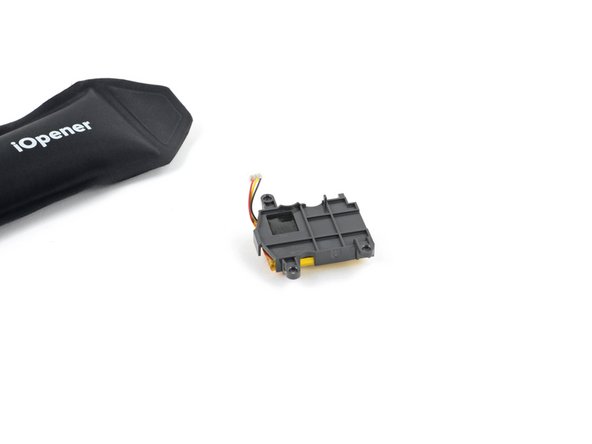
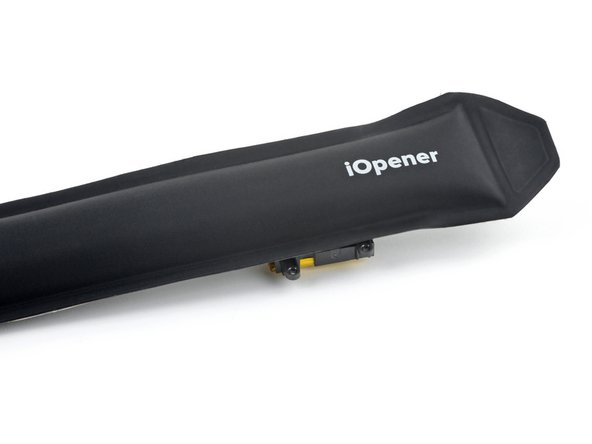


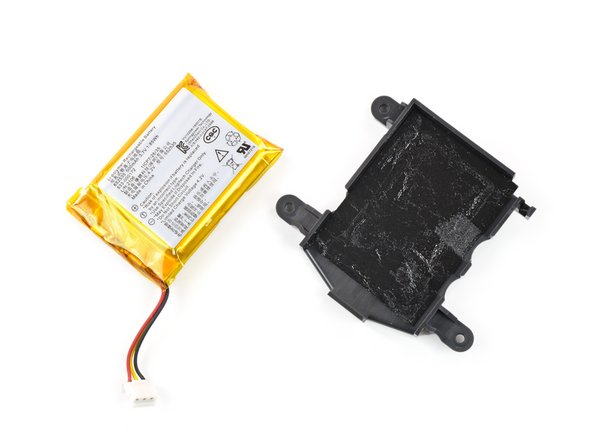

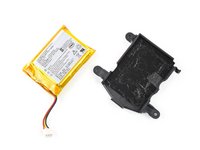
Compare your new replacement part to the original part—you may need to transfer remaining components or remove adhesive backings from the new part before you install it.
To reassemble your device, follow these instructions in reverse order.
Repair didn’t go as planned? Try some basic troubleshooting, or ask our Answers community for help.
Reuse or Recycle—Never put discarded electronic parts in household waste. Visit Logitech Recycling to find your nearest recycling points, including the option to mail back old devices to Logitech for free if there’s no convenient solution in your area. You can also take your e-waste to any R2 or e-Stewards certified recycler. And don’t let good working parts or repaired devices die a slow death in your sock drawer—pass them along to someone who can use them.
Share your experience—Leave a comment here or send your feedback directly to Logitech at repair@logitech.com to help shape future repair guides and product design.


