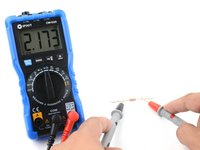
crwdns2933423:0crwdne2933423:0
crwdns2947577:0crwdnd2947577:0crwdne2947577:0

How To Use A Multimeter

crwdns2942213:0crwdne2942213:0

  1. How To Use A Multimeter, Testing Continuity: crwdns2935265:01crwdnd2935265:01crwdnd2935265:01crwdne2935265:0
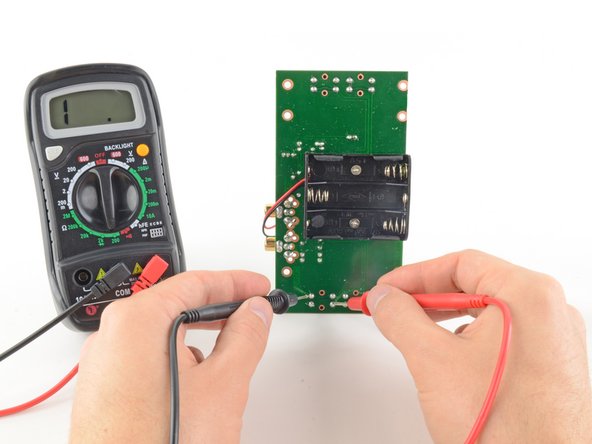
    • A continuity test tells us whether two things are electrically connected: if something is continuous, an electric current can flow freely from one end to the other.

    • If there's no continuity, it means there is a break somewhere in the circuit. This could indicate anything from a blown fuse or bad solder joint to an incorrectly wired circuit.

    • Continuity is one of the most useful tests for electronics repair.

    crwdns2952109:0crwdne2952109:0

    crwdns2917038:0crwdne2917038:0

  2. How To Use A Multimeter: crwdns2935265:02crwdnd2935265:01crwdnd2935265:03crwdne2935265:0 How To Use A Multimeter: crwdns2935265:02crwdnd2935265:02crwdnd2935265:03crwdne2935265:0 How To Use A Multimeter: crwdns2935265:02crwdnd2935265:03crwdnd2935265:03crwdne2935265:0
    • To begin, make sure no current is running through the circuit or component you want to test. Switch it off, unplug it from the wall, and remove any batteries.

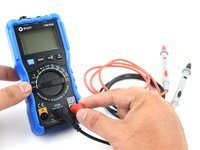
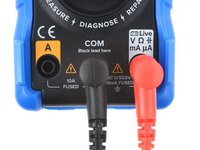
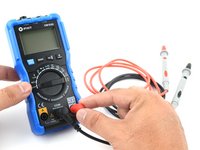
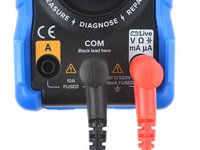
    • Plug the black probe into the COM port on your multimeter.

    • Plug the red probe into the port labeled with a V symbol (in this case, the right port).

    crwdns2952109:0crwdne2952109:0

    crwdns2917038:0crwdne2917038:0

  3. How To Use A Multimeter: crwdns2935265:03crwdnd2935265:01crwdnd2935265:01crwdne2935265:0
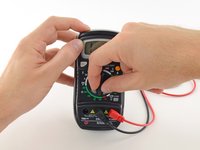
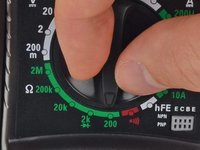
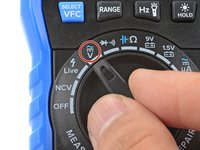
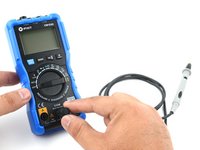
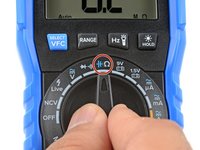
    • Switch on your multimeter, and set the dial to continuity mode (indicated by an icon that looks like a sound wave).

    • Not all multimeters have a dedicated continuity mode. If yours doesn’t, that’s okay! Skip to step 6 for an alternate way to perform a continuity test.

    crwdns2952109:0crwdne2952109:0

    crwdns2917038:0crwdne2917038:0

  4. How To Use A Multimeter: crwdns2935265:04crwdnd2935265:01crwdnd2935265:02crwdne2935265:0 How To Use A Multimeter: crwdns2935265:04crwdnd2935265:02crwdnd2935265:02crwdne2935265:0
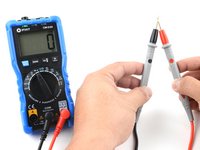
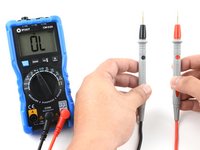
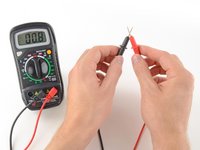
    • The multimeter tests continuity by sending a little current through one probe, and checking whether the other probe receives it.

    • If the probes are connected—either by a continuous circuit, or by touching each other directly—the test current flows through. The screen displays a value of zero (or near zero), and the multimeter beeps. Continuity!

    • If the test current isn't detected, it means there's no continuity. The screen will display 1 or OL (open loop).

    crwdns2952109:0crwdne2952109:0

    crwdns2917038:0crwdne2917038:0

  5. How To Use A Multimeter: crwdns2935265:05crwdnd2935265:01crwdnd2935265:02crwdne2935265:0 How To Use A Multimeter: crwdns2935265:05crwdnd2935265:02crwdnd2935265:02crwdne2935265:0
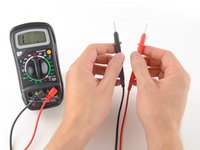
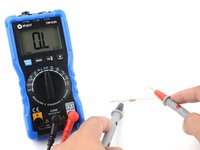
    • To complete your continuity test, place one probe at each end of the circuit or component you want to test.

    • As before, if your circuit is continuous, the screen displays a value of zero (or near zero), and the multimeter beeps.

    • If the screen displays 1 or OL (open loop), there's no continuity—that is, there's no path for electric current to flow from one probe to the other.

    • Continuity is non-directional, meaning it doesn't matter which probe goes where. But there are exceptions—for instance, if there's a diode in your circuit. A diode is like a one-way valve for electricity, meaning it will show continuity in one direction, but not in the other.

    • To check for this, reverse what the probes are touching and check for continuity. If the multimeter shows continuity, then it's possibly a diode.

    crwdns2952109:0crwdne2952109:0

    crwdns2917038:0crwdne2917038:0

  6. How To Use A Multimeter, Test for continuity (alternate method): crwdns2935265:06crwdnd2935265:01crwdnd2935265:02crwdne2935265:0 How To Use A Multimeter, Test for continuity (alternate method): crwdns2935265:06crwdnd2935265:02crwdnd2935265:02crwdne2935265:0
    • If your multimeter doesn't have a dedicated continuity test mode, you can still perform a continuity test.

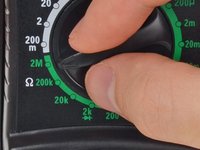
    • Turn the dial to the resistance mode.

    • If your multimeter has manual ranging, set the resistance to the lowest setting.

    • Resistance is measured in ohms, indicated by the symbol Ω.

    crwdns2952109:0crwdne2952109:0

    crwdns2917038:0crwdne2917038:0

  7. How To Use A Multimeter: crwdns2935265:07crwdnd2935265:01crwdnd2935265:02crwdne2935265:0 How To Use A Multimeter: crwdns2935265:07crwdnd2935265:02crwdnd2935265:02crwdne2935265:0
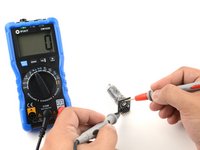
    • In this mode, the multimeter sends a little current through one probe, and measures what (if anything) is received by the other probe.

    • If the probes are connected—either by a continuous circuit, or by touching each other directly—the test current flows through. The screen displays a value of zero (or near zero—in this case, 0.8). Very low resistance is another way of saying that we have continuity.

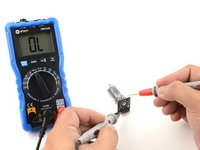
    • If no current is detected, it means there's no continuity. The screen will display 1 or OL (open loop).

    crwdns2952109:0crwdne2952109:0

    crwdns2917038:0crwdne2917038:0

  8. How To Use A Multimeter: crwdns2935265:08crwdnd2935265:01crwdnd2935265:02crwdne2935265:0 How To Use A Multimeter: crwdns2935265:08crwdnd2935265:02crwdnd2935265:02crwdne2935265:0
    • To complete your continuity test, place one probe at each end of the circuit or component you want to test.

    • It doesn't matter which probe goes where; continuity is non-directional.

    • As before, if your circuit is continuous, the screen displays a value of zero (or near zero).

    • If the screen displays 1 or OL (open loop), there's no continuity—that is, there's no path for electric current to flow from one probe to the other.

    crwdns2952109:0crwdne2952109:0

    crwdns2917038:0crwdne2917038:0

  9. How To Use A Multimeter, Measuring voltage: crwdns2935265:09crwdnd2935265:01crwdnd2935265:03crwdne2935265:0 How To Use A Multimeter, Measuring voltage: crwdns2935265:09crwdnd2935265:02crwdnd2935265:03crwdne2935265:0 How To Use A Multimeter, Measuring voltage: crwdns2935265:09crwdnd2935265:03crwdnd2935265:03crwdne2935265:0
    • The next four steps will show you how to measure voltage.

    • Plug the black probe into the COM port on your multimeter.

    • Plug the red probe into the port labeled with a V symbol (in this case, the right port).

    crwdns2952109:0crwdne2952109:0

    crwdns2917038:0crwdne2917038:0

  10. How To Use A Multimeter: crwdns2935265:010crwdnd2935265:01crwdnd2935265:02crwdne2935265:0 How To Use A Multimeter: crwdns2935265:010crwdnd2935265:02crwdnd2935265:02crwdne2935265:0
    • Switch on your multimeter, and set the dial to DC voltage mode (indicated by a V with a straight line, or the symbol ⎓).

    • Virtually all consumer electronic devices run on DC voltage. AC voltage—the kind that runs through the lines to your house—is considerably more dangerous, and beyond the scope of this guide.

    • Your multimeter may be auto-ranging or manual ranging. An auto-ranging multimeter (such as the iFixit multimeter) will automatically determine the best measuring range. All you have to do is set what kind of measurement you want to take.

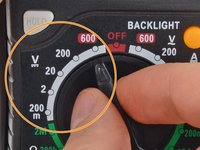
    • If your multimeter is manual ranging, you'll also need to set the correct range for the voltage you expect to measure.

    • Each setting on the dial lists the maximum voltage it can measure. So for example, if you expect to measure more than 2 volts but less than 20, use the 20 volt setting.

    • If you're not sure, start with the highest setting.

    crwdns2952109:0crwdne2952109:0

    crwdns2917038:0crwdne2917038:0

  11. How To Use A Multimeter, Auto-ranging voltage measurement: crwdns2935265:011crwdnd2935265:01crwdnd2935265:02crwdne2935265:0 How To Use A Multimeter, Auto-ranging voltage measurement: crwdns2935265:011crwdnd2935265:02crwdnd2935265:02crwdne2935265:0
    • If your multimeter is manual ranging, skip to the next step.

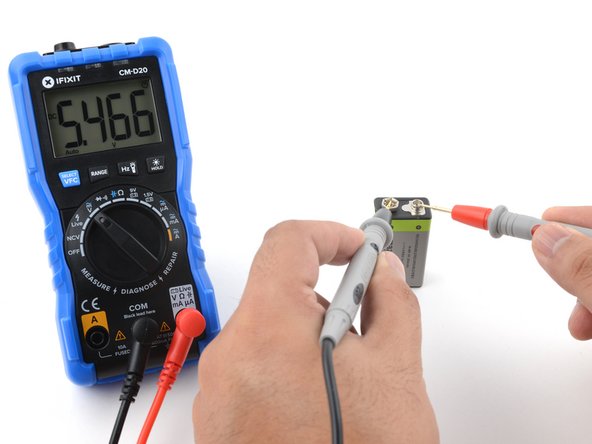
    • Place the red probe on the positive terminal, and the black probe on the negative terminal. The multimeter will display the measured voltage.

    • Reversing the probes won't do any harm; it just gives a negative reading.

    • Skip the next step, which describes how to measure voltage using manual ranging multimeters.

    crwdns2952109:0crwdne2952109:0

    crwdns2917038:0crwdne2917038:0

  12. How To Use A Multimeter, Manual ranging voltage measurement: crwdns2935265:012crwdnd2935265:01crwdnd2935265:03crwdne2935265:0 How To Use A Multimeter, Manual ranging voltage measurement: crwdns2935265:012crwdnd2935265:02crwdnd2935265:03crwdne2935265:0 How To Use A Multimeter, Manual ranging voltage measurement: crwdns2935265:012crwdnd2935265:03crwdnd2935265:03crwdne2935265:0
    • Follow this step to measure voltage with a manual ranging multimeter.

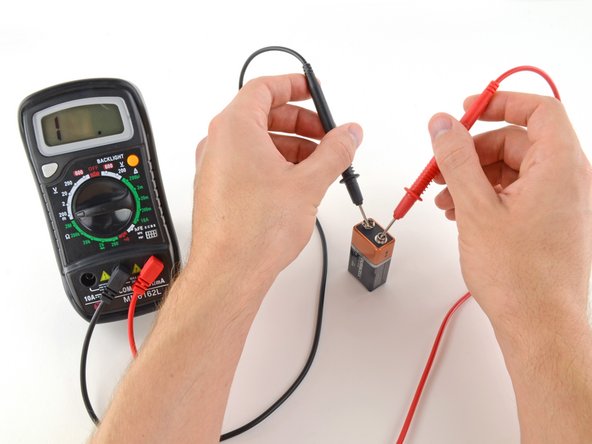
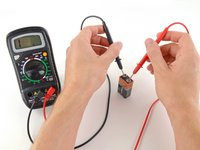
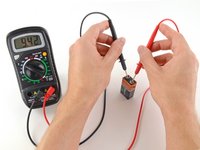
    • Place the red probe on the positive terminal, and the black probe on the negative terminal.

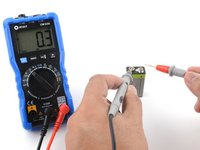
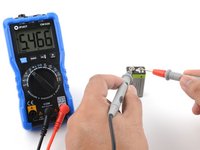
    • If your range was set too high, you may not get a very precise reading. Here the multimeter reads 9 volts. That's fine, but we can turn the dial to a lower range to get a more precise.

    • If you set the range too low, the multimeter simply reads 1 or OL, indicating that it is overloaded or out of range. This won't hurt the multimeter, but we need to set the dial to a higher range.

    • With the range set correctly, we get a reading of 9.42 volts.

    • Reversing the probes won't do any harm; it just gives us a negative reading.

    crwdns2952109:0crwdne2952109:0

    crwdns2917038:0crwdne2917038:0

  13. How To Use A Multimeter, Measuring resistance: crwdns2935265:013crwdnd2935265:01crwdnd2935265:03crwdne2935265:0 How To Use A Multimeter, Measuring resistance: crwdns2935265:013crwdnd2935265:02crwdnd2935265:03crwdne2935265:0 How To Use A Multimeter, Measuring resistance: crwdns2935265:013crwdnd2935265:03crwdnd2935265:03crwdne2935265:0
    • The next three steps will show you how to measure resistance with your multimeter.

    • To begin, make sure no current is running through the circuit or component you want to measure. Switch it off, unplug it from the wall, and remove any batteries.

    • Remember that you'll be measuring the resistance of the entire circuit. If you want to measure an individual component such as a resistor, measure it by itself—not with it soldered in place!

    • Plug the black probe into the COM port on your multimeter.

    • Plug the red probe into the port labeled with an Ω symbol (in this case, the right port).

    crwdns2952109:0crwdne2952109:0

    crwdns2917038:0crwdne2917038:0

  14. How To Use A Multimeter: crwdns2935265:014crwdnd2935265:01crwdnd2935265:02crwdne2935265:0 How To Use A Multimeter: crwdns2935265:014crwdnd2935265:02crwdnd2935265:02crwdne2935265:0
    • Switch on your multimeter, and set the dial to resistance mode.

    • Resistance is measured in ohms, indicated by the Ω symbol.

    • The iFixit multimeter is auto-ranging, meaning it will automatically determine the best measuring range.

    • If your multimeter is manual ranging, you will need to set the correct range for the resistance you expect to measure. If you're not sure, start with the highest setting.

    crwdns2952109:0crwdne2952109:0

    crwdns2917038:0crwdne2917038:0

  15. How To Use A Multimeter: crwdns2935265:015crwdnd2935265:01crwdnd2935265:02crwdne2935265:0 How To Use A Multimeter: crwdns2935265:015crwdnd2935265:02crwdnd2935265:02crwdne2935265:0
    • Place one probe at each end of the circuit or component you want to measure.

    • It doesn't matter which probe goes where; resistance is non-directional.

    • If your multimeter is manual ranging:

    • If your multimeter reads close to zero, the range is set too high for a good measurement. Turn the dial to a lower resistance range.

    • If you set the range too low, the multimeter simply reads 1 or OL, indicating that it is overloaded or out of range. This won't hurt the multimeter, but we need to set the dial to a higher range.

    • The other possibility is that the circuit or component you are measuring doesn't have continuity—that is, it has infinite resistance. A non continuous circuit will always read 1 or OL on a resistance test.

    crwdns2952109:0crwdne2952109:0

    crwdns2917038:0crwdne2917038:0

crwdns2935217:0crwdne2935217:0

crwdns2935221:0crwdne2935221:0

crwdns2935229:01137crwdne2935229:0

Jeff Suovanen

crwdns2935283:008/06/13crwdne2935283:0

452,802 crwdns2915208:0crwdne2915208:0

crwdns2935297:0259crwdne2935297:0

crwdns2935287:0crwdne2935287:0

iFixit crwdns2935289:0iFixitcrwdne2935289:0

Staff

crwdns2931471:0122crwdne2931471:0

crwdns2935297:025,930crwdne2935297:0

crwdns2947412:0149crwdne2947412:0

Thank you! Never find instructions so easy to follow.

kuruvar - crwdns2934203:0crwdne2934203:0 crwdns2950251:0crwdne2950251:0
Iwant to know hw to test caperstas

kapambwe sikazwe - crwdns2934203:0crwdne2934203:0 crwdns2950251:0crwdne2950251:0

Super guide, many thanks for posting!

Alan - crwdns2934203:0crwdne2934203:0 crwdns2950251:0crwdne2950251:0

crwdns2917038:0crwdne2917038:0

crwdns2936625:0crwdne2936625:0:

crwdns2936751:024crwdne2936751:0 132

crwdns2936753:07crwdne2936753:0 962

crwdns2936753:030crwdne2936753:0 4,165

crwdns2942667:0crwdne2942667:0 1,779,366