

CPU


CPU

Front Fan

GPU

Hard Drive

Left Panel

M.2 NVME SSD

Motherboard

RAM

RAM

RAM

Right Panel
|
crwdns2933315:04crwdne2933315:0 crwdns2934263:03crwdne2934263:0 |
My Computer is slow starting up |
|
crwdns2933315:03crwdne2933315:0 crwdns2934263:06crwdne2934263:0 |
My PC doesn't display the bios screen and boots straight into Windows |
|
crwdns2933315:02crwdne2933315:0 crwdns2934263:01crwdne2934263:0 |
micro SD Card write protection |
|
crwdns2933315:07crwdne2933315:0 crwdns2934263:02crwdne2934263:0 |
Why is my computer spontaneously turning off while playing games? |
crwdns2935065:0crwdne2935065:0
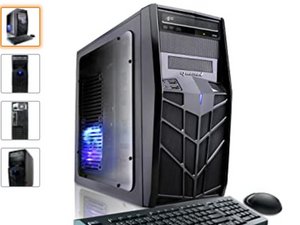
A typical desktop PC is any PC that resides in a single location and does not have user interface components built within the system, such as a keyboard, mouse, or monitor. This does not include any laptops or all-in-one PCs.
Desktop PCs are commonly enclosed in cases known as "towers," which are generally rectangular boxes that are taller than they are wide. The weight of a desktop PC can range from 5 to 50 lbs depending on the components inside and depending on the material and size of its case.
The core components of a desktop PC include a power supply unit, a motherboard, a central processing unit (CPU), a graphical processing unit (GPU), RAM (Random Access Memory), and a hard drive.
If you have a prebuilt PC, navigate to System Information in Settings in order to determine model name and number.
CPSU-MANESS-S15S4G5
crwdns2931471:04crwdne2931471:0
crwdns2935297:0132crwdne2935297:0
crwdns2936751:024crwdne2936751:0 45
crwdns2936753:07crwdne2936753:0 379
crwdns2936753:030crwdne2936753:0 1,792
crwdns2942667:0crwdne2942667:0 201,980