crwdns2915892:0crwdne2915892:0
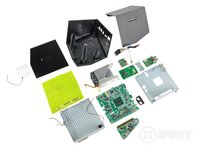
The Boxee Box is a cubist deviation from the traditionally rectangular set-top box. The oddly-shaped form factor forced D-Link to make the internals equally odd. But that also made it super fun to take apart!
We're also taking action against made-for-obsolescence devices with our Self-Repair Manifesto. Pay with a tweet and get a free poster!
crwdns2942213:0crwdne2942213:0
-
-
-
Ladies and gentlemen, iFixit is proud to present the Boxee Box by D-Link.
-
It's hard to ignore how much taller the Boxee Box is than the Apple TV and Logitech Revue. This half-sunken cube will definitely stand out in your entertainment system.
-
Yet, we feel that the Box has build quality that rivals Apple's, and is much more solid-looking than the Revue. The front panel is made of
glasssturdy plastic and displays a Boxee logo once you power on the device.
 crwdns2952109:0crwdne2952109:0
-
-
-
The Boxee Box looks huge when compared to the Apple TV, but it's really not that cumbersome in real life -- the Apple TV is just teeny tiny.
-
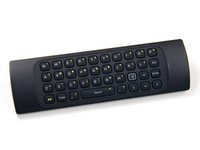
The Box' remote is only a tad bigger, but features a Qwerty keyboard that would come oh-so-handy on the Apple TV. Otherwise, spelling out "the lonely island" takes a while on YouTube.
-
It does remind us of a certain other Apple product, though...
-
-
-
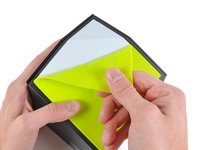
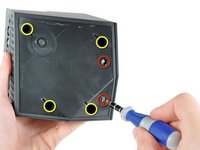
We had to peel off Boxee's lime-green rubber base and the adhesive sheet underneath to expose four #1 Phillips and two #2 Phillips screws.
-
The #2 Phillips screws are clearly visible when you peel off the rubber base.
-
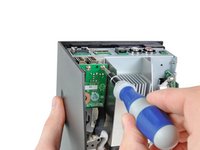
The #1 Phillips are recessed, so you'll need a screwdriver with a longer shaft to access them.
-
-
-
The bottom cover of the Boxee Box pulls off fairly easily, exposing all of its boxy goodness.
-
The Boxee Box gives us everything we want, and nothing we don't need:
-
HDMI out
-
Optical and analog (RCA) audio out
-
Ethernet
-
Two USB ports
-
The RCA jacks are a great addition for people who want to hook up the Boxee directly to computer speakers or retro stereo equipment.
-
-
-
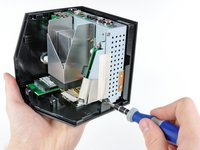
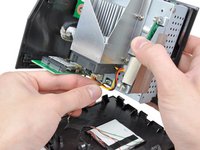
A single #1 Phillips screw and a bunch of plastic clips hold the front panel to the side of the Boxee Box.
-
The front panel can be detached by disconnecting the connector for the status panel.
-
-
-
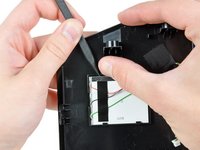
A little bit of prying and the status panel can be removed from the front panel.
-
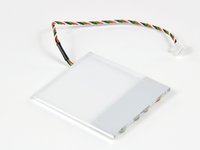
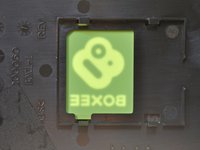
A soft white plate on the status panel disperses the light from a couple LEDs to illuminate the semi-transparent Boxee logo either orange (standby) or green (running).
-
-
-
-
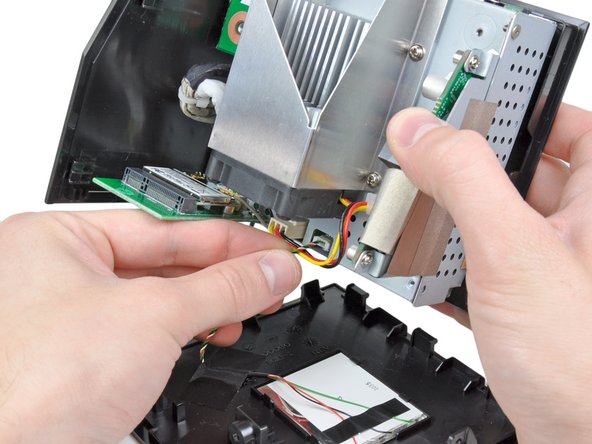
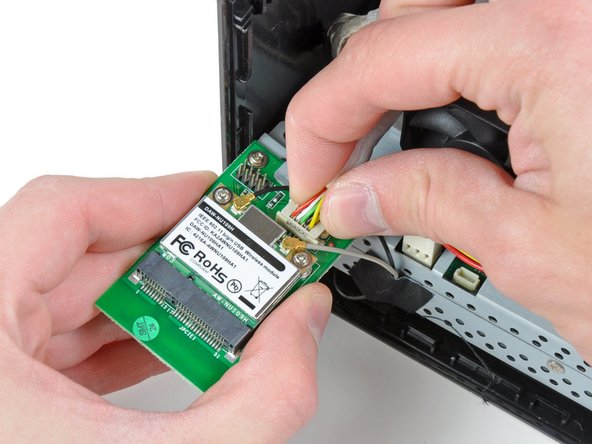
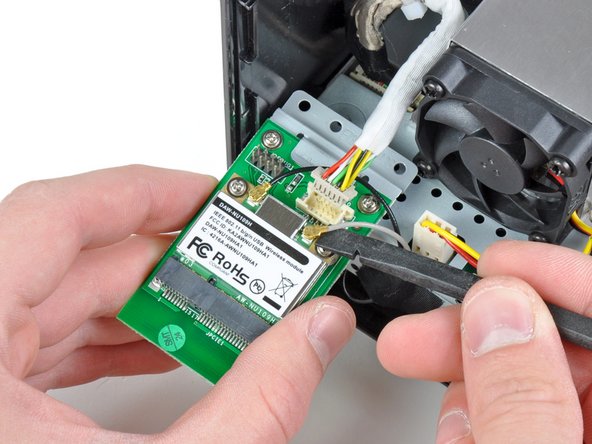
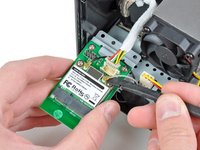
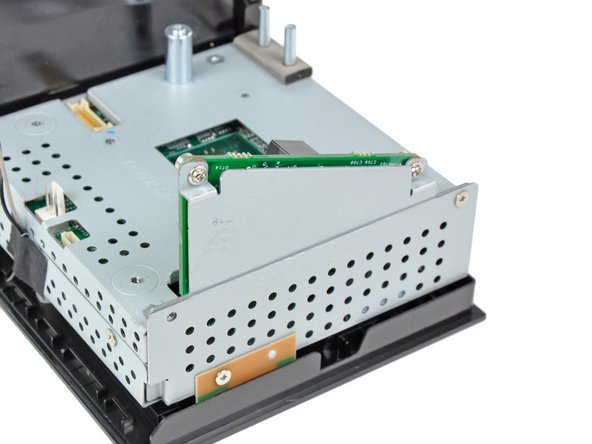
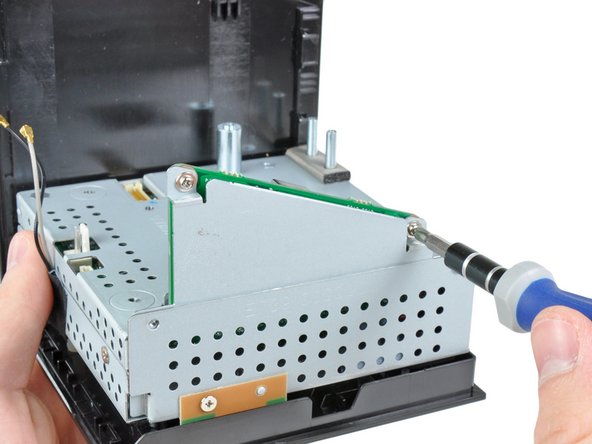
The Boxee Box' wireless board is secured to the metal frame by more Phillips screws.
-
It certainly is refreshing to see common screw types in electronics. When you don't need special tools to repair devices, it's easier to fix it yourself.
-
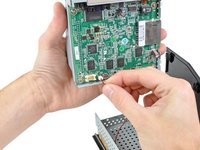
The wireless board is held on by a data connector and a couple antenna cables.
-
-
-
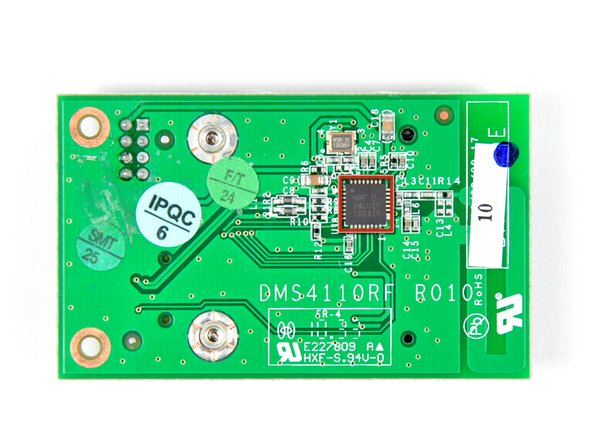
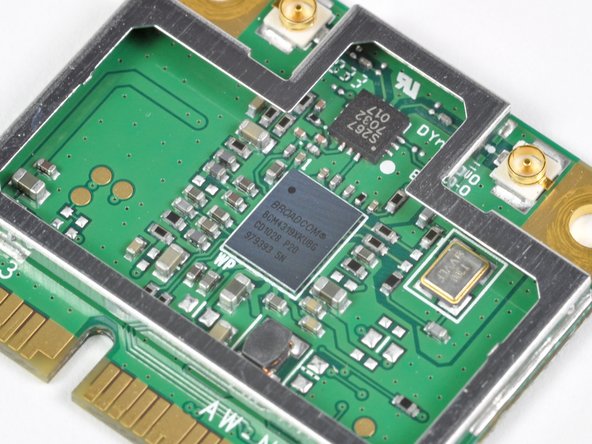
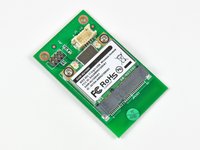
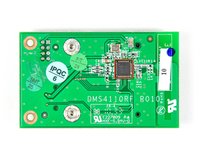
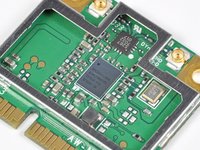
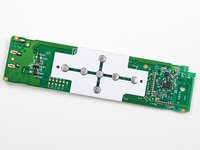
The wireless card assembly is composed of a Mini PCI-E wireless card and an interconnect board where the cable from the motherboard is connected.
-
On the back side of the interconnect board we found a Nordic Semiconductor NRF24LU1P transceiver.
-
This chip is most likely used to decode signals received from the awesome QWERTY wireless remote.
-
We recently found the same chip in the Boxee's direct competitor, the Logitech Revue.
-
The Mini PCI-E wireless card employs a Broadcom BCM4319XKUBG.
-
An remote control antenna is printed into the interconnect board right below the Mini PCI-E socket. This is positioned near the top of the device when it is assembled to aid in remote control reception.
-
-
-
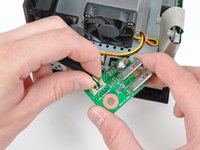
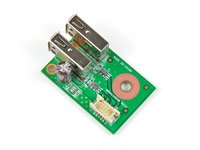
Next come the dual USB ports, which are mounted on a small PCB.
-
The PCB is connected by two #1 Phillips screws, as well as a connector that runs to the motherboard.
-
A thorough USB board analysis reveals a 220 μF capacitor, a PTC Fuse to protect against faulty USB devices, ESD Protection hardware (Clamp diodes and series inductors), and two USB sockets.
-
-
-
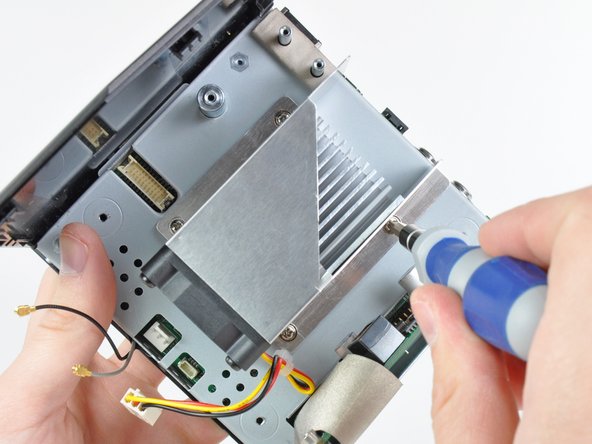
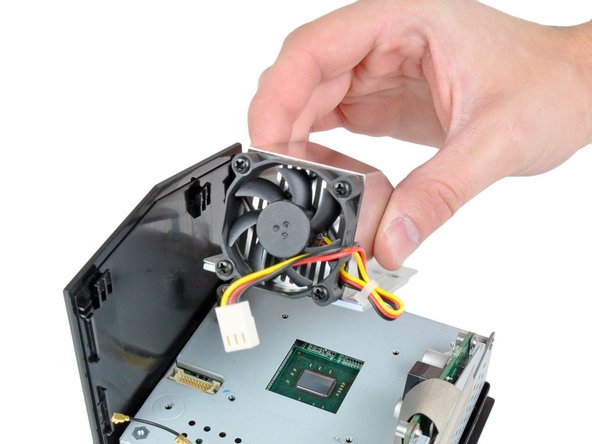
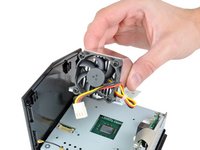
We progress by removing the fan and heatsink assembly from the CPU. It's time to find out what makes this baby tick.
-
Instead of using thermal paste, the Boxee Box uses a phase-change thermal pad much like the one found on the heat sink of the Logitech Revue.
-
-
-
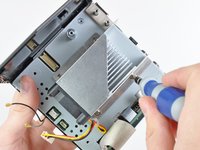
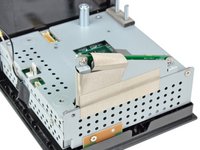
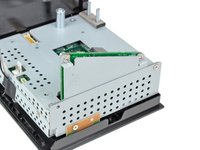
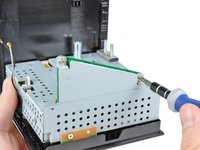
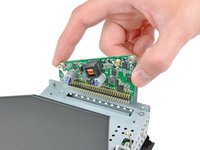
A couple strips of EMI tape and a few more Phillips screws hold a very triangular power board in place.
-
The tape is most likely placed around the exposed circuits to eliminate audio interference from the power conversion process.
-
-
-
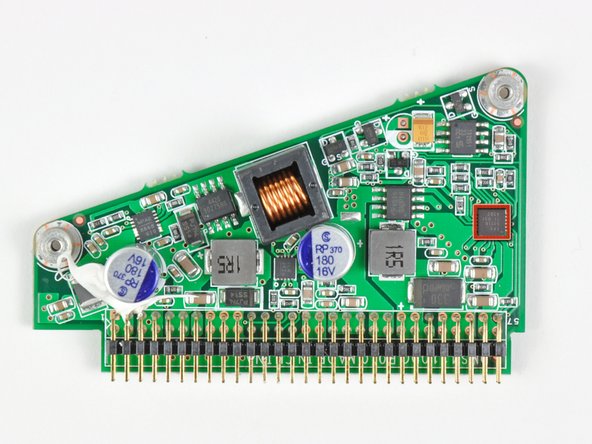
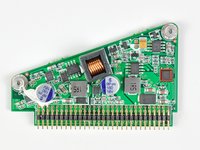
What do you find inside of an oddly-shaped device? An oddly-shaped power board, of course.
-
On this board we find:
-
-
-
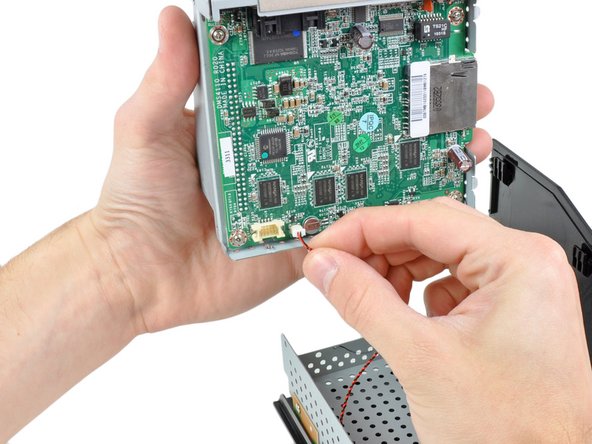
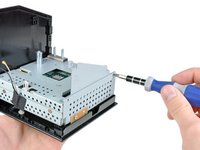
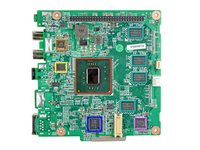
After removing a couple more Phillips screws, the motherboard can be removed from the rest of the metal frame.
-
Once it's lifted out, the power button connector is the only thing keeping us from getting a closer look at the board.
-
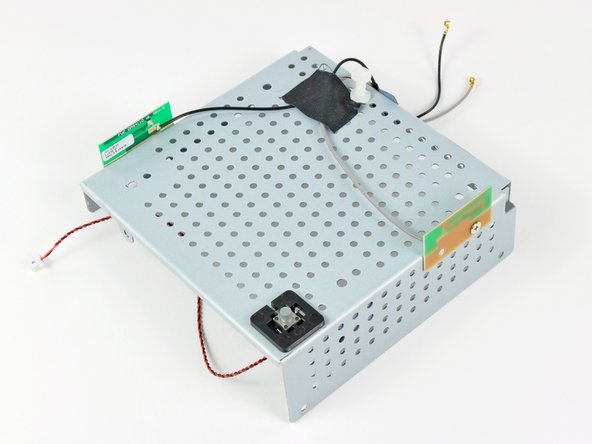
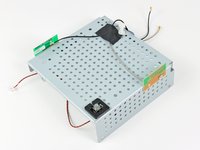
Once the motherboard is out, the bottom metal frame can be removed from the plastic outer casing.
-
The power button switch and dual antennas are mounted to the bottom metal frame, making it one compact unit.
-
-
-
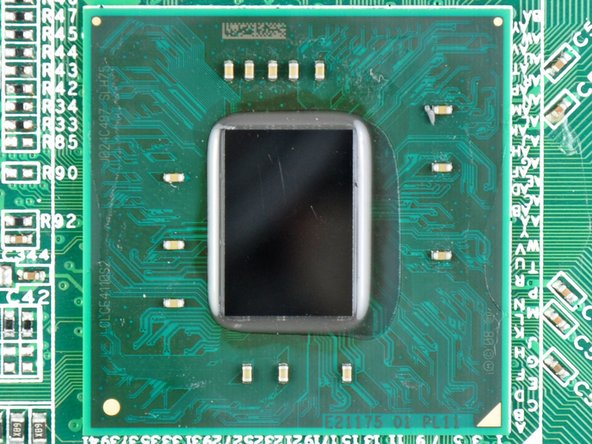
After popping off the top metal cover, we find:
-
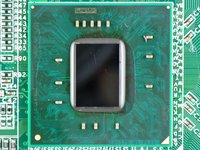
Intel Atom CE4110 SOC processor
-
Wolfson WM8524G stereo DAC
-
AKM 8137A multi-clock generator
-
Nanya 1035 NT5CB128MCN-CG 512 MB DDR3 SDRAM (1/2 total RAM capacity)
-
RealTek RTL8201N 10/100 Ethernet PHYceiver
-
FE1.1 USB 2.0 HUB LG3A924A6180
-
-
-
The other side of the motherboard:
-
Toshiba NF3662 TC58NVG3S0ETA00 1 GB NAND Flash
-
LB TS21C HF 1031S
-
Microchip PIC24FJ64GA004-I/PT 16-bit microcontroller
-
Nanya NT5CB128M8CN-CG 512 MB DDR3 SDRAM (1/2 total RAM capacity)
-
-
-
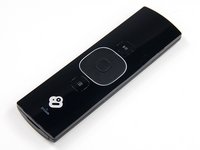
The Boxee Box's remote is very impressive. The front side has a basic directional pad with a select button in addition to separate play and menu buttons.
-
Instead of employing a full-sized keyboard like the Logitech Revue, Boxee Box engineers cleverly applied a mini QWERTY keyboard to the backside of the remote.
-
When we cracked the remote control open, we discovered a Nordic Semi NRF24LE1 for wireless connectivity to the Nordic Semi NRF24LU1P transceiver attached to the wireless interconnect board.
-
-
-
Boxee Box Repairability: 7 out of 10 (10 is easiest to repair)
-
The Boxee has a separate power board that can be replaced independently from the motherboard, should it ever fail.
-
All Phillips screws were used inside the device, requiring you to have just one screwdriver.
-
Once inside, all components come apart pretty logically.
-
The green rubber bottom of the Boxee Box is difficult to remove, and will never look the same once you've removed it.
-
-





















crwdns2947412:06crwdne2947412:0
Was this a production board? What's with the rework at R12 (bottom left of the Atom, towards the ethernet port)? And the damaged-looking U707 IC (above center of Atom just below DIL socket)?
Hugo Vincent - crwdns2934203:0crwdne2934203:0 crwdns2950251:0crwdne2950251:0
At Step 14 you can see an addition to R12 (at the HDMI port).
The little Diode looks like a last second EMI precaution.
It would be interesting to know if it is properly soldered.
Spunkhart - crwdns2934203:0crwdne2934203:0 crwdns2950251:0crwdne2950251:0
One of my capacitors in step 12 overheated and is leaking. This has broken my boxee, can anyone help me find the exact capacitor I should order?
Thank you,
Jamie
jamie radcliffe - crwdns2934203:0crwdne2934203:0 crwdns2950251:0crwdne2950251:0
I take it that the memory in this unit is not upgradeable? Would be nice to refresh this box that is getting long in the tooth.
Josh Smith - crwdns2934203:0crwdne2934203:0 crwdns2950251:0crwdne2950251:0
just came from Best Buy. Went there on a whim and fell on a streaming media universal remote by RCA. Paid $2.99 + tax. Bought it of course for my Boxee. Hope it works. Package says works with Dlink, Roku etc. Now all I need is a power adapter. Anyone know where i can buy a good for a similarly good price
ge - crwdns2934203:0crwdne2934203:0 crwdns2950251:0crwdne2950251:0
