crwdns2915892:0crwdne2915892:0
Follow this guide to replace, upgrade, or customize the action (ABXY), Menu, View, Steam, Quick Access Menu, and D-Pad buttons in your Steam Controller (2nd Gen, 2026).
If the buttons in your Steam Controller are damaged, sticking, or rattling, you may need to replace them. Swapping out the silicone button membranes may also fix the issue.
Problems with button inputs not registering may indicate an issue with the flexible button circuit If you suspect that's the case, follow this guide to replace it.
crwdns2942213:0crwdne2942213:0
-
-
-
Unplug all cables and accessories from the controller, including the Steam Controller Puck.
 crwdns2952109:0crwdne2952109:0
-
-
crwdns2935267:0crwdne2935267:0TR6 Torx Security Screwdriver$5.99
-
Use a T6 Torx screwdriver to remove the seven screws securing the back cover.
-
Throughout this repair, keep track of each screw and make sure it goes back exactly where it came from.
-
-
-
-
-
Lift the right edge of the battery to remove it.
-
-
-
-
-
Use a T6 Torx screwdriver to remove the four 7.4 mm‑long screws securing the battery mounting bracket.
-
-
-
Remove the battery mounting bracket.
-
-
-
-
-
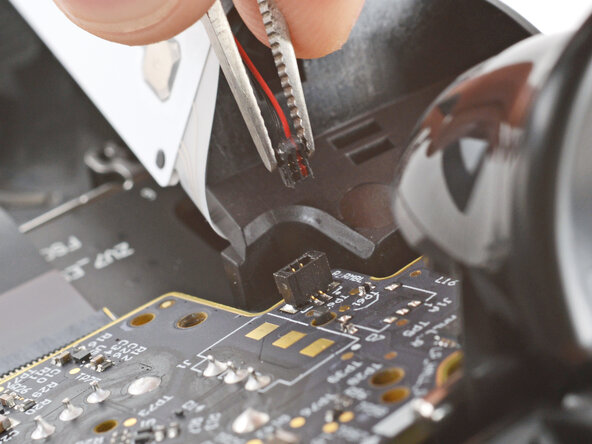
Firmly grip the short edges of one rumble motor connector with a pair of tweezers and pull straight up to disconnect it
-
-
-
Repeat to disconnect the other rumble motor.
-
-
-
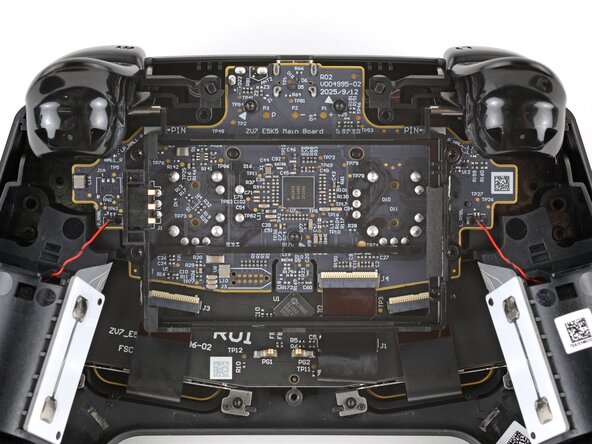
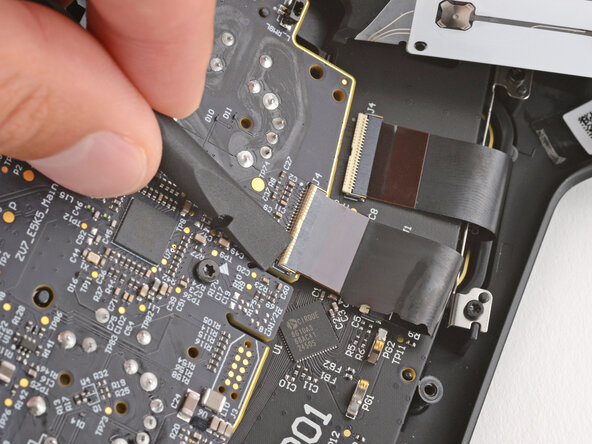
Use a spudger to lift the hinged locking flap on the interconnect cable ZIF connector, located on the bottom edge of the main board.
-
-
-
Use tweezers to grip the cable by its plastic pull tab and slide it out of the socket.
-
-
-
-
Use a T6 Torx screwdriver to remove the three 7.4 mm‑long screws securing the main board.
-
-
-
Pull the main board down so the top corners clear the triggers.
-
Remove the main board, guiding the thumbsticks through their cutouts.
-
-
-
If the rubber piece is out of place, remove it and set it aside.
-
-
-
-
-
With one hand, hold one of the triggers down in the fully actuated position.
-
With your free hand, use tweezers to pull the hinge pin straight out and remove it.
-
-
-
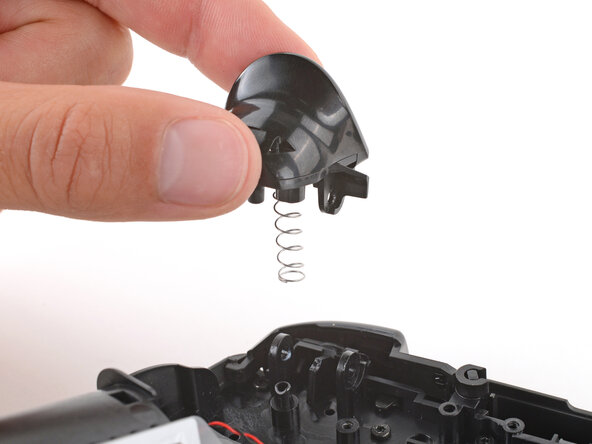
Lift the trigger straight up and remove it.
-
Remove the spring and store it in a safe place for reassembly.
-
-
-
Repeat to remove the other trigger.
-
-
-
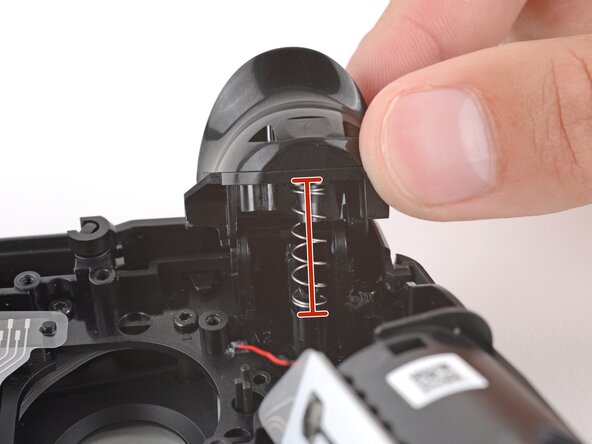
Place one of the trigger springs over its post on the controller.
-
Put the trigger in place, making sure the spring goes over both of its posts (one on the controller and one on the trigger) and that the hinge holes are all aligned.
-
Hold the trigger down and slide the pin through both hinge holes—the pin will stop sliding once it's fully inserted.
-
Test the trigger to ensure the pin was properly installed.
-
Repeat to install the other trigger.
-
-
-
Use a T6 Torx screwdriver to remove the eleven 7.4 mm‑long screws securing the midframe.
-
-
-
Lift the midframe straight up and remove it.
-
Check the two large silicone button pads to make sure they're aligned properly and fully seated—if they aren't, button presses may feel off or not register.
-
Use the alignment posts to ensure the midframe is in the right position.
-
-
-
-
-
Remove the three silicone button membranes.
-
-
-
Use tweezers to remove the D‑Pad, View, Steam, Menu, and ABXY buttons.
-
To replace the Quick Access Menu button, you'll need to remove the remaining board attached to the front shell. Check out this guide to do so.
-
-
-
Make sure the button dampeners (that surround the button recesses) are pushed down and fully seated against the shell. Otherwise, button presses may feel off or not register.
-
-
-
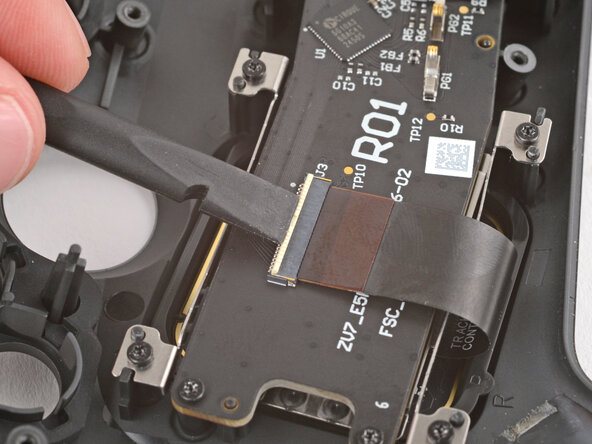
Use the flat end of a spudger to lift the hinged, locking flap on one of the touchpad ZIF connectors.
-
-
-
Use tweezers to grip the cable by its plastic pull tab and slide it out of the socket.
-
-
-
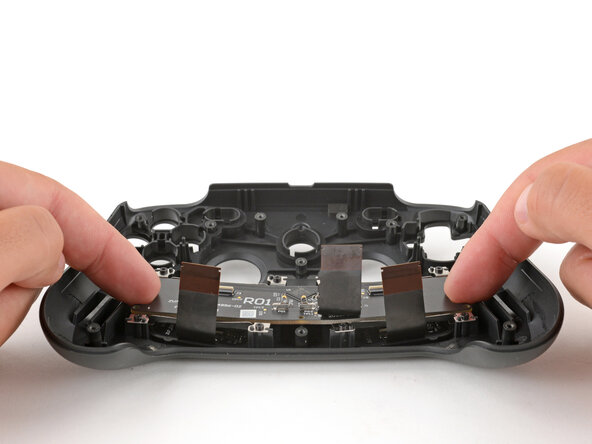
Repeat to disconnect the other touchpad cable.
-
-
-
Use a T5 Torx screwdriver to remove the four 6.0 mm‑long screws securing the FSC board.
-
-
-
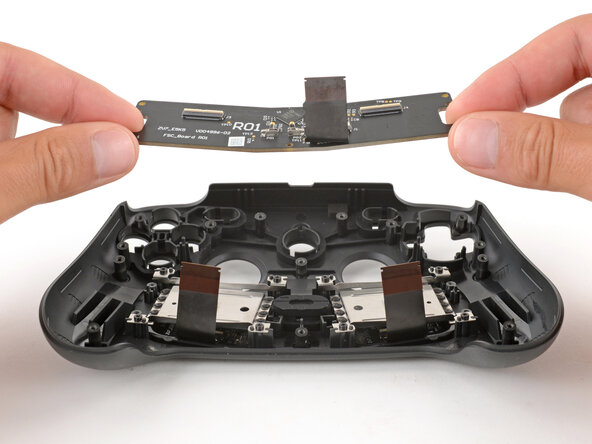
Remove the FSC board.
-
Use the alignment pegs to ensure the board is correctly positioned.
-
-
-
Remove the Quick Access Menu membrane and button.
-
-
















To reassemble your device, follow these instructions in reverse order.
Repair didn’t go as planned? Try some basic troubleshooting, or ask our Answers community for help.

